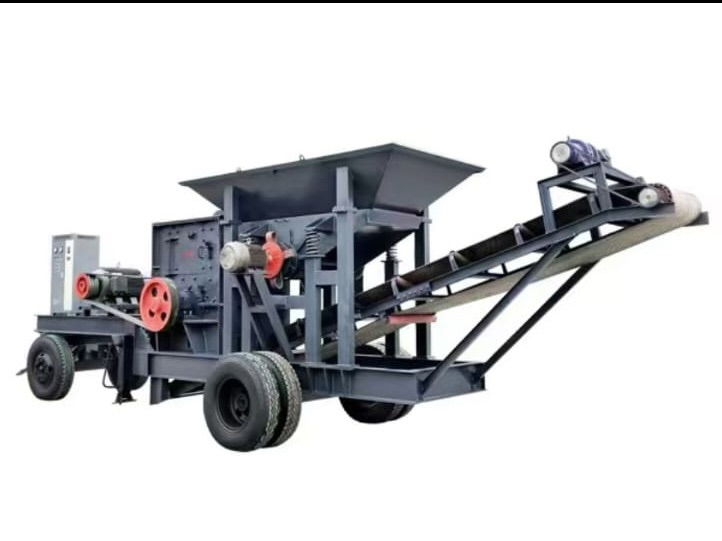
A mobile crusher is a self-contained crushing plant mounted on tracks or wheels, allowing it to move easily between job sites. Instead of transporting raw material to a fixed plant, the crusher comes to the material.
Key Features and Types
- Mobility Options: Available as track-mounted (for rough terrain) or wheel-mounted (for easier transport between sites).
- Crusher Types:
- Jaw Crushers: Often used as primary crushers for initial, heavy-duty crushing.
- Impact Crushers (HSI/VSI): High-speed machines for crushing soft-to-medium hard stone and creating specialized, uniform aggregates.
- Cone Crushers: Used for secondary or tertiary crushing of hard materials.
- Automation: Modern mobile crushers, such as those from FABO or Metso, often feature PLC automation, remote monitoring, and hydraulic folding components for quick setup.
Advantages
- Cost Efficiency: Saves money by reducing transport costs and reducing the need for purchasing expensive materials, as materials can be recycled on-site.
- Flexibility: Ideal for smaller or temporary projects where a fixed crusher is not practical.
- High Performance: Despite being mobile, these machines can handle high capacities (e.g., up to 850 t/h or more).
Common Applications
- Quarrying & Mining: Crushing materials for mineral extraction.
- Construction: Producing aggregate for roads, bridges, and building foundations.
- Recycling: Processing construction waste (concrete, brick) for reuse.